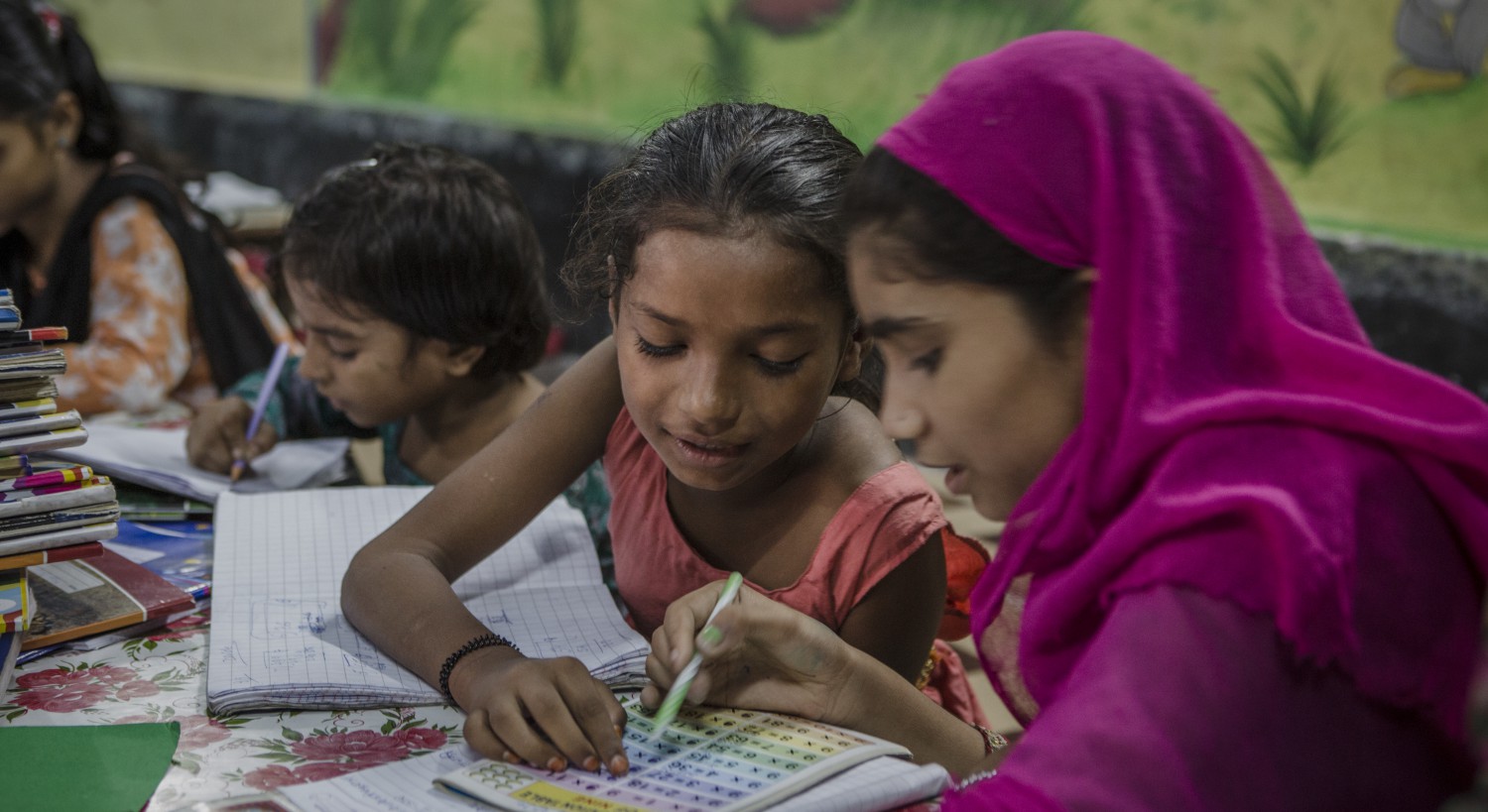
What a day! Our focus was a visit to a Community Managed Toilet in South Delhi – it was amazing. Hearing what Save the Children have helped to achieve was impressive, and seeing the pride that the local community take from its success was truly inspiring.
We started with a briefing in the Save the Children office to give us an idea of their overall strategy, and of the scale of the challenges that they face here in Delhi. One of the major elements of that strategy is child survival, and they are having a significant impact in that area by working on some very basic things. To give you an idea of the scale of the problem 150,000 children under 5 in India die every year from diarrhoea alone. To reduce this access to clean water and sanitation is essential, and that is the thrust of many of their programmes.
So what is this Community Managed Toilet? Simply it’s a toilet block that has been equipped and supported by Save the Children in a Delhi slum – it contains toilet, shower and laundry facilities. That does sound pretty straightforward, but it doesn’t come close to doing it justice. In fact the block had been in place since 1983, and like many similar blocks had fallen into disrepair. The government had provided the buildings and let contracts for 3rd parties to operate and maintain them. That just didn’t work. What has changed here is that Save the Children have worked with the community so that they take the responsibility for running the block. In fact they have worked specifically with local women – it is now administered by a board of 14 local women. At the front of the block they have set up a small shop which sells sanitary products, helping to fund the running of the block. They’ve also set up an ATM machine which dispenses purified drinking water at a low cost. They’re making compost from biodegradable waste, and plan to start growing vegetables.
Empowering the community to take this on has been hugely effective. The block is now well maintained and clean. The women and children talked so proudly of what they have achieved and what a difference it is making to their lives, their families are healthier, and problems with diarrhoea are hugely reduced. What Save the Children have helped to achieve is not the building of a toilet block, but the building of confidence in the community about what they can achieve for themselves.
It was a joy to meet some of the women board members and hear them talk clearly and confidently about their experience. We also met the father of one of the women who thanked us passionately “25 times” for what Save the Children had done. Bawal (one of the women board members) told us how people from far afield were coming to see what had been achieved and how to go about it for themselves. The children told us how it had helped them, smiled happily, then played with us or just watched us curiously.
We visited one project in a small part of one slum. This toilet block is used by about 1000 people. Save the Children are working in 90 slums across Delhi, which house around 900,000 people, but there are 628 official slums, and beyond this many slums that have not been officially recognised by the government. You can understand I’m sure that while slums have many problems, the unrecognised ones have even more issues since they don’t even have the most basic facilities. The great news is that the Delhi government has seen the success of this project and wants to work with Save the Children to extend this approach across all the slums. It’s fabulous what Save the Children have achieved here. Changing the attitudes of government and community takes huge patient effort, and to extend the programme will require lots of resources, but the results will be worth it.


 Save the Children - India projects observed
You paint a remarkable picture of what can be achieved and the enormity that lies ahead.
LikeLike
What a worthwhile cause!! and what an eye opener. Wish you a good continuation. Looking forward to the next update. Warm regards. S+G
LikeLike
Simple and innovative solutions Andy, all quite humbling though in the sheer scale of how things are there.
LikeLike