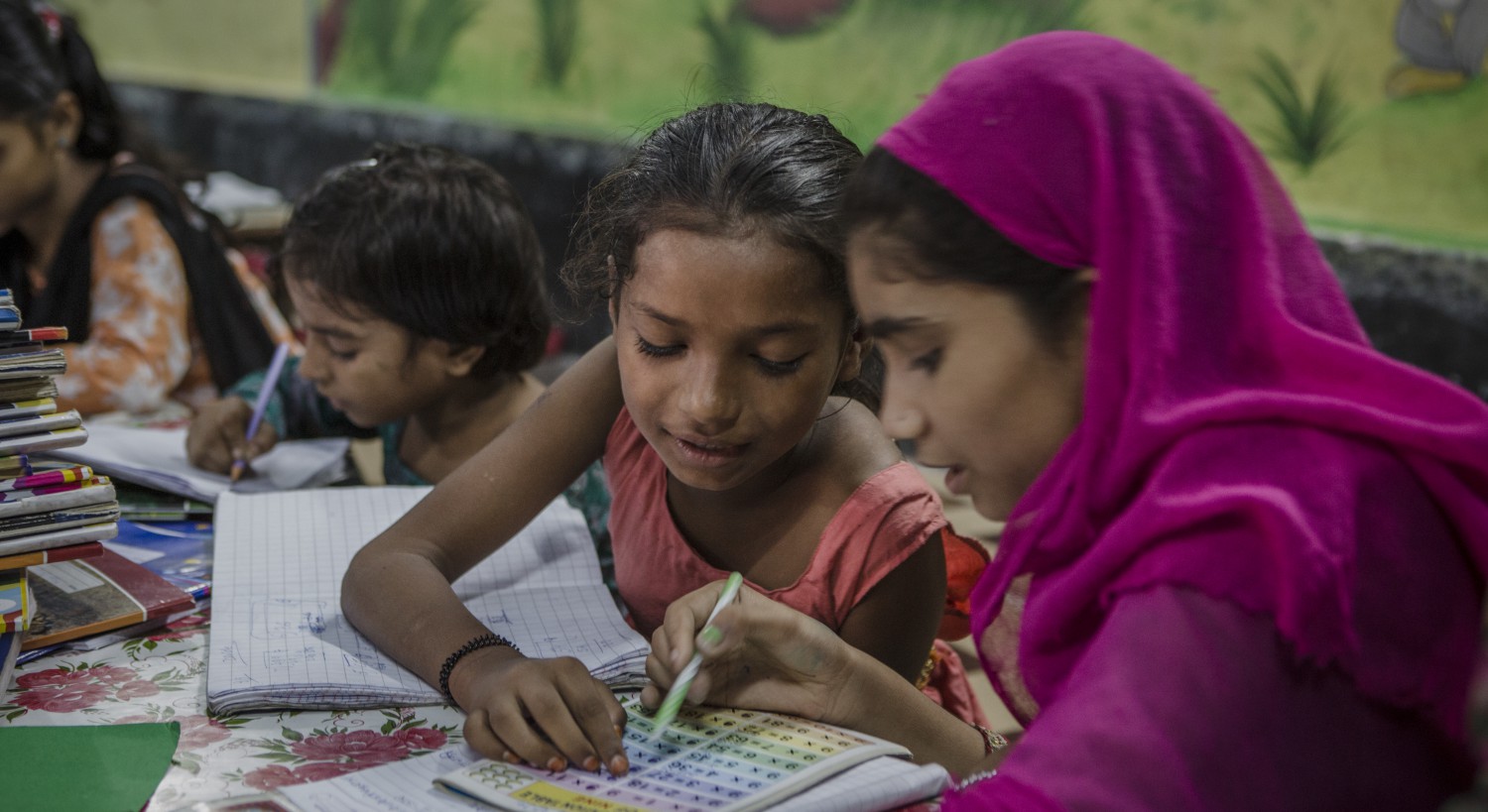
The region that we visited yesterday was close to Dungarpur – it’s a fascinating area, very remote and isolated which has left it very poor. There are significant cultural differences from the rest of India and it’s the only area in India where there are more girls than boys. This has come about because of the traditional culture of the tribes where women have a dominant role. For example it is accepted for a woman to have a family with one man, then move on to have another family with a different man, (a practice called nata). This can lead to some complex extended families, which in turn can cause problems for the children.
Here there isn’t the discrimination against female babies that I wrote about a couple of days ago in Udaipur. The impact can be seen in the numbers in the schools (the local teacher told us he had 70% girls in his class), or just in the mix of young children walking by the road. And if you look at who is hanging off the side of public transport it is just as likely to be a girl as a boy, definitely something you wouldn’t see elsewhere.


Images from Padili
Because of the poverty, many of the children in the area are sent to work to help earn for their families – this could be in the local fields, or they could go away to work (illegally) in the cotton fields of Gujarat. It’s reported that 40,000 children from this area are involved in that industry – a horrific story of child exploitation. The government has a number of schemes which aim to give a basic level of income to the poorest families, but often the benefits do not flow through to the children. So there’s good reason for Save the Children to be working here.
The local staff told us about their Child Sensitive Social Protection project which works with children in many situations, aiming to boost their confidence and their understanding of children’s rights. The children we met yesterday were being helped by the programme. It also provides training to the extended family carers to help them understand children’s needs and rights.
There are lots of activities used to get these messages across. We stopped en route to Padili and were treated to see a folk theatre performance by a group of adults including role-play and dance to illustrate the impact of traditional attitudes on children. It was enthusiastically performed and well received by the local audience. When the programme is extended outside the region it won’t just be in Dungarpur that they will be dancing!
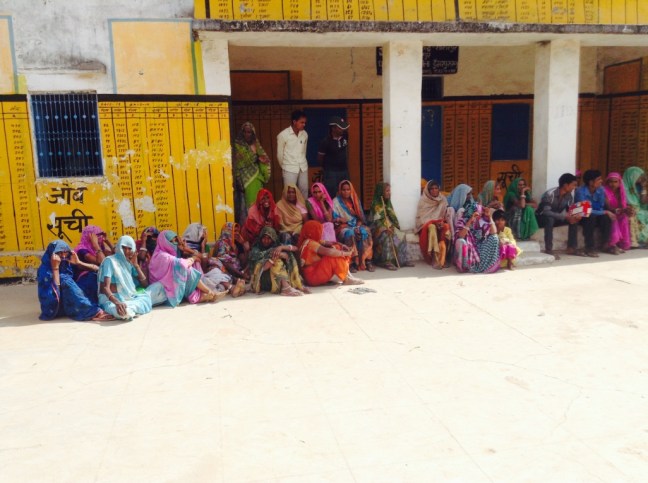
ps if you’re in the dancing mood and want to see the welcome dance from Govindpuri school, you can catch it on https://youtu.be/BgA2nM6XZxE
 Save the Children - India projects observed