Mutual Well-being

Nima is the Save the Children staff member in Dungarpur, and it was inspiring to hear her passion when she talked about the programmes and when she was with the children on our field visits. Another programme she told us about was the Community Health Protection Programme. This is directly funded by Save the Children in response to a very high infant mortality rate. and is a very different project than I expected to see here.

The profound belief in faith-healers, compounded by poor health infrastructure increases means its too long before people seek proper help, so diseases are prevalent and health costs for families escalate. Save the Children have helped set up a kind of mutual health care arrangement which is managed by a group of about 15 women from the area, with advice and support from Save the Children staff. This scheme provides coverage for health care costs and loss of income for an affordable premium. Save the Children are also providing basic health care in these remote areas – in Padili we met with two volunteers who have been trained as nurses to care for local children. All this, coupled with discounts negotiated with the region’s hospitals, means that children are receiving better health care and are also less likely to be forced to work if their parents are ill. Richard described the story of how one little girl was helped in his blog on Friday – why not take a look.

I have loved the diversity of approaches that Save the Children are using here, and the way that there is always an emphasis on community involvement.

So at the end of our day in Padili it was time to start our long journey home. We smiled  on the way back when we stopped for something to eat in a local restaurant and the owner recognised us from our Save the Children tee-shirts. He told us that he had seen us on the TV over the previous 2 days – odd to be recognised so many miles from home! Let’s hope that the press coverage can help in some small way to get Save the Children’s messages across.

I’m home now, but still have one or two things about the trip that I’d like to share. I hope you’ll keep your eye open and support the blog for a few days more.

Why are they dancing in Dungarpur?

The region that we visited yesterday was close to Dungarpur – it’s a fascinating area, very remote and isolated which has left it very poor. There are significant cultural differences from the rest of India and it’s the only area in India where there are more girls than boys. This has come about because of the traditional culture of the tribes where women have a dominant role. For example it is accepted for a woman to have a family with one man, then move on to have another family with a different man, (a practice called nata). This can lead to some complex extended families, which in turn can cause problems for the children.

Here there isn’t the discrimination against female babies that I wrote about a couple of days ago in Udaipur. The impact can be seen in the numbers in the schools (the local teacher told us he had 70% girls in his class), or just in the mix of young children walking by the road. And if you look at who is hanging off the side of public transport it is just as likely to be a girl as a boy, definitely something you wouldn’t see elsewhere.

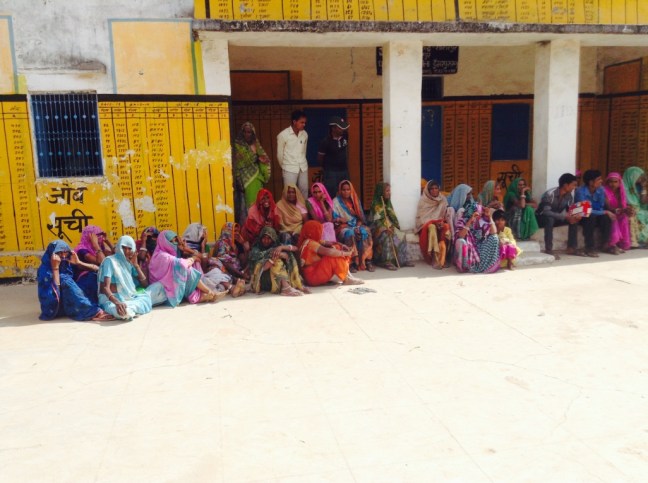
Images from Padili

Because of the poverty, many of the children in the area are sent to work to help earn for their families – this could be in the local fields, or they could go away to work (illegally) in the cotton fields of Gujarat. It’s reported that 40,000 children from this area are involved in that industry – a horrific story of child exploitation. The government has a number of schemes which aim to give a basic level of income to the poorest families, but often the benefits do not flow through to the children. So there’s good reason for Save the Children to be working here.

The local staff told us about their Child Sensitive Social Protection project which works with children in many situations, aiming to boost their confidence and their understanding of children’s rights. The children we met yesterday were being helped by the programme. It also provides training to the extended family carers to help them understand children’s needs and rights.

There are lots of activities used to get these messages across. We stopped en route to Padili and were treated to see a folk theatre performance by a group of adults including role-play and dance to illustrate the impact of traditional attitudes on children. It was enthusiastically performed and well received by the local audience. When the programme is extended outside the region it won’t just be in Dungarpur that they will be dancing!

thumb_IMG_0126_1024
Watching the folk theatre performance!

ps if you’re in the dancing mood and want to see the welcome dance from Govindpuri school, you can catch it on https://youtu.be/BgA2nM6XZxE

The best question

I love questions, and today I was asked one of the finest questions that I remember. We had travelled to Padili, a remote tribal village close to the Rajhastan border with Gujarat, and were meeting with a group of children who were part of Save the Children’s Child Sensitive Social Protection project. I’ll tell you more about that at some point, but first to that question.

We had walked a fair distance across the fields from the community centre to meet the children from the local villages and the Save the Children volunteers at their regular meeting place. They greeted us with traditional ceremony, and were delighted when we handed over some small gifts – skipping ropes, balls, and such like. It was fantastic to see the children’s excitement as they chased bubbles, balls and balloons, and learned to skip. But then it was time to get to business and so we all sat down in a circle on the ground and we asked them questions, which they answered politely. They enjoyed going to the Save the Children run centre, they liked painting, and had made new friends. When we asked them a tougher question “What do you know about children’s rights?” a young boy answered perfectly – “Every child has the right to an education, to be healthy, to grow up safe and to be heard”. Education about children’s rights is a major piece of the Save the Children programme so it was good to hear that this is getting through. Finally we suggested that they might like to ask us some questions, and that’s when it came out.

A young girl quietly asked us “Will you play with us?”, and that changed the day. We said yes, and then decided together to play steal the handkerchief. It was fantastic fun even if the children beat the Save the Children team soundly! (But then they had practiced more recently than we had!) What a memorable moment.

Later as we drove away, I thought about what a fabulous question that was. We’d gone to meet the children and were firmly in our adult world of questions and answers. Then this young girl had the courage to say what she wanted, and things changed. What a beautiful metaphor for some of the fundamental rights of a child – to be heard, and to be a child.

That was our last visit, and a fitting climax to what has been a truly memorable trip. We left Padili and straight away started our long journey home. It’s late now and we have an early start tomorrow so I’ll leave it there for now. Tomorrow while we travel I hope I’ll have more time to tell you about the other things that we saw and learned about on today’s visits – there’s a lot still to tell.

Urgent work in Udaipur

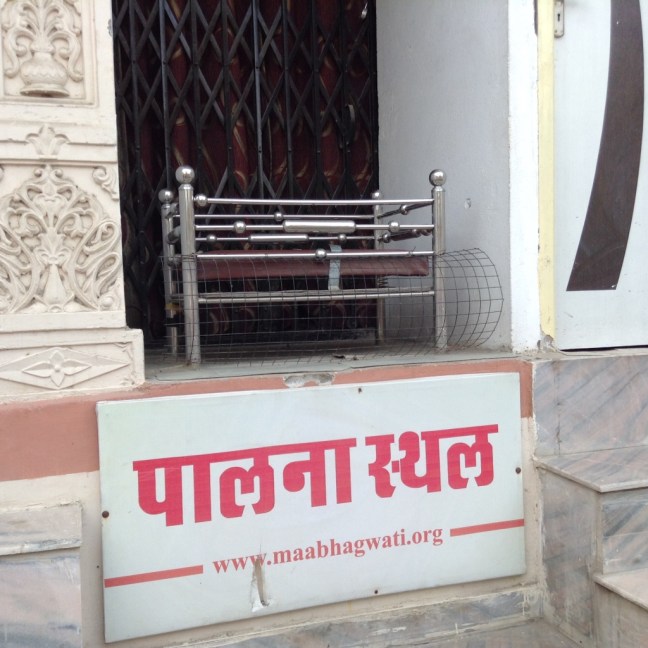
thumb_IMG_0105_1024This cradle sits outside a hospital in Udaipur, discretely behind a screen. It is set on springs so that when a child is placed in it a bell rings inside and the staff can collect the baby. The cradle is there so that if a woman is going to abandon her baby she can at least make sure the baby is given the care it needs to survive. Sadly, together with its twin outside an ashram on the edge of the city, it has been used 129 times over the last 8 years. This is a tragic major problem in India, and particularly so for girls since many Indian families prefer to have boys.

After the baby has received the immediate attention that she needs, she is taken to the Mahesh Ashram which is a home for abandoned babies. The home was founded by Yogi Devendra Aggrawa, and there they care for the child while working to get them adopted. Today we met Yogi Devendra and he told us about how wants his ashram to be a cradle of hope – a haven for abandoned infants. His goals fit well with Save the Children’s work on child survival, and they are working together with him and the government to take the model that is working here in Udaipur and apply it around the state. We also met TV and radio reporters there – let’s hope any publicity about our visit helps get the message out about the importance of essential care and services like this!

Earlier we had visited the Divya Mother’s Milk Bank (it was also founded by Yogi Devendra). This is the first of this type of facility in the North of India, and it is part of the nation’s efforts to increase the use of breast feeding in order to improve infant mortality. One of the biggest issues for the Milk Bank is in changing cultural attitudes so it has been important to work on that at the same time as providing the physical facilities. Save the Children have worked closely and patiently with the Milk Bank, managing to increasing acceptance by the community. So far over 1800 babies have benefited from this particular scheme. They’ve also been working with the government, so now the model is being replicated in 10 other locations in Rajasthan.

So two more great examples of how Save the Children are working in India. Tomorrow is our last day of visits before we set off for home. I know that all the team have been impressed with the work that we’ve seen here. Why not take a look at their blogs too?  You might get a slightly different perspective from them –  you can use the links to their blogs on my home page. I hope you’ll join me again tomorrow.

Right on in Rajasthan

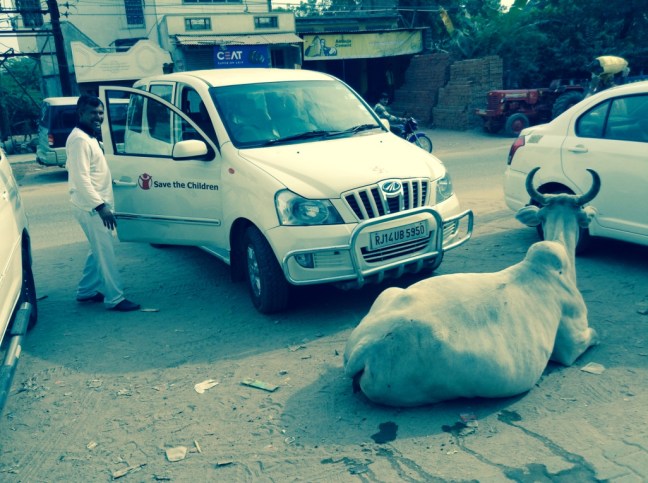
thumb_IMG_0094_1024
Double parked in Tonk!

Today we were in Rajasthan in the small town of Tonk, about 100km south of Jaipur and home to close to 200,000 people. It has a significant Muslim population. I was struck throughout the day with how Save the Children have been able to build strong links with the Islamic religious leaders alongside other community groups. Those links have been instrumental in changing attitudes and traditional practices, improving child health while at the same time respecting religious values. Now isn’t that a critical skill in today’s world?

Everyone has had to work patiently to build these relationships, but now the religious leaders lend their support to some key basic health initiatives. On the other hand, Save the Children have listened to the community and been able to act as their advocates with the government. One practical example of this – many women were giving birth in unsuitable conditions at home because they were likely to have to see male doctors, but after Save the Children’s intervention a woman only hospital is now under construction.

As we saw in Delhi yesterday, the government has seen the success of this approach and wants to use it in all the wards across the city. This is how Save the Children is able to unlock government money to scale up on their successful programmes.

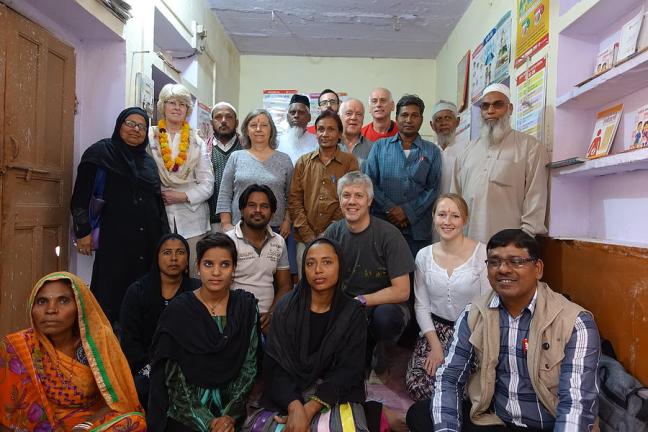
community leaders. jpeg

We met with the community group early in the day, and saw women from the community actively involved alongside the religious leaders. Then at a local Anganwadi centre we saw how Save the Children are helping to improve the implementation of the government initiatives for pre-school care and education. The regular measurement and display of results would put most commercial companies to shame, and the volunteers there were justifiably proud of what they are achieving.

The last part of our visit to Tonk was to meet a group of young people who have just been through a Save the Children training programme to make them aware of children’s rights. While the words written in government policy might be good, people in areas like this have not been made aware of what their rights are and what this means for them. This training is intended to help children become more confident, to stand up for themselves and make their own choices about how they will live their lives. It had certainly worked with this group! They were happy, determined and self-confident and they sent us away smiling.

And still there was more…

Yes, it was a busy day!

A short drive and we were able to see another example of how Save the Children are helping to empower communities to help themselves.

In a community centre we were introduced to a group led by a man from an Indian NGO who had produced a map – the first holistic map – of the whole of their slum area, including all the vital infrastructure such as drains and standpipes etc. That in itself was quite something, but the really smart bit was that they have been able to use a specially designed app to take the data they have gathered to interface with the Delhi government systems. This means they can get quicker and more effective responses from the authorities when they have problems like broken drains or leaking pipes. All in service of improving their environment, and so improving child health. Great stuff!

So what was Save the Children’s role in this? They trained the man from the NGO, they developed the app, and they are helping with the interface to the authorities. And again, the government are looking to extend this new system to the other slum areas. Good work.

Here too the people we met were enthusiastic and welcoming. They teased us and played with us. And they talked positively about the improvements that they are seeing as well as about Save the Children’s role in them. It was great meeting them.

Now we’re moving on from Delhi with its urban projects. There are so many things from our few days here in the slum areas that were not what I was expecting. I hope I will find time later on to write a little more about that.
For now I’ll just say that the scale of the challenge here seems at first overwhelming, but we have seen that there are some simple things that can be done which have a big impact, and that’s where Save the Children are focussing.

Wash those germs away

Our first visit this morning was to a primary school in Govindpuri, again in South Delhi, to see Save the Children’s WASH programme in action. We’d already heard a little about it in yesterday’s briefing – it’s part of their effort to improve child health. The programme which has been put in place is a simple scheme which has shown itself to be effective through a massive drop in illness, and as a result the government want to extend it to other areas.

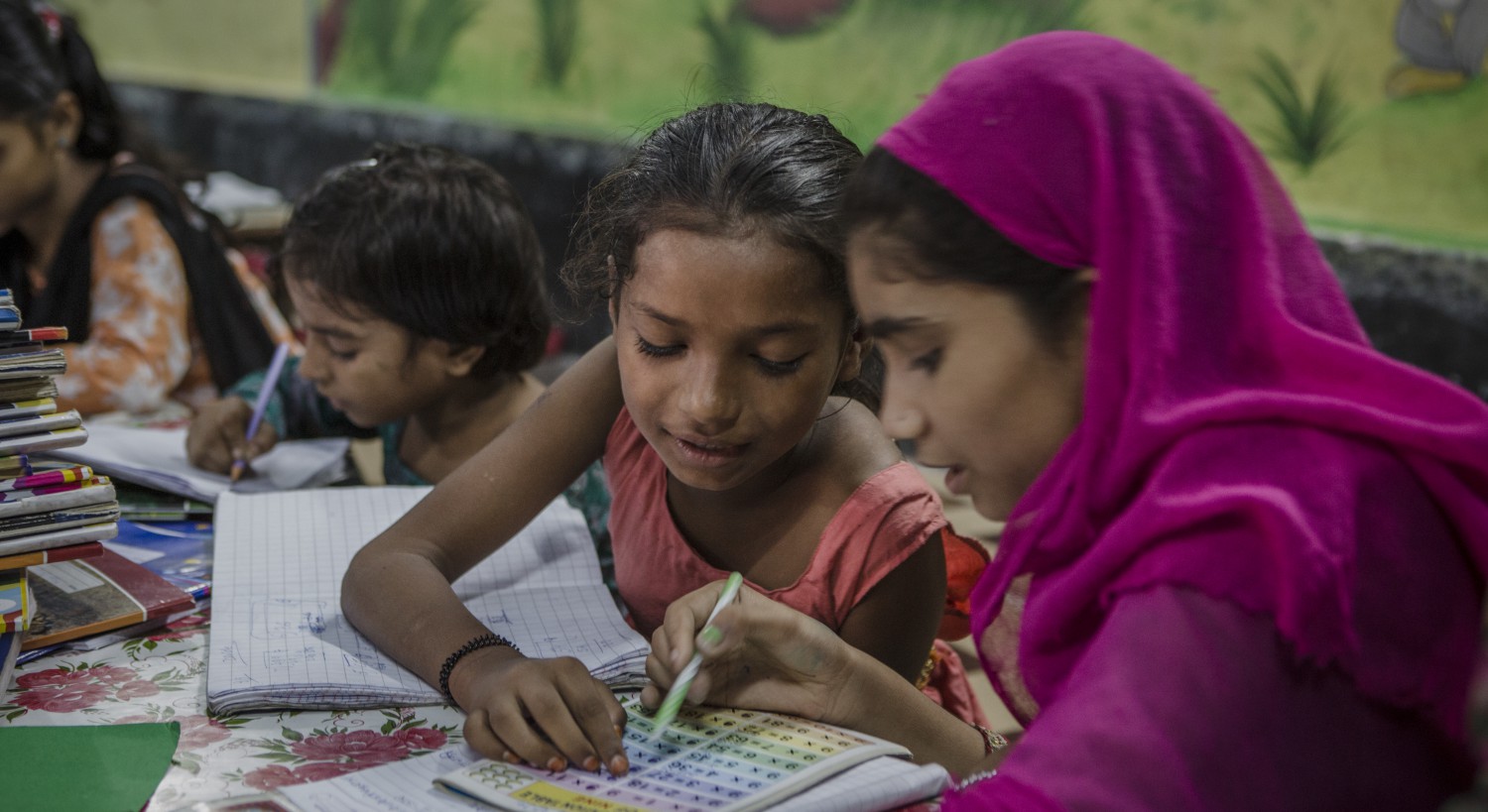
The school is attended by children from a slum similar to the one we attended yesterday morning – girls attend in the morning, and boys in the afternoon, about 500 for each session. There was already a toilet block and a hand-washing station at the school, but they were poorly designed and poorly maintained. Save the Children redesigned the facilities to make them child-friendly (e.g. hand basins at different heights for different years), improved the maintenance, and also worked with the teachers so that they have built hand-washing into their daily routines. The children have taken these lessons back to their families so that they are benefiting too. Another essential part of the programme is to empower the children to take on the responsibility to report any problems with the facilities. We were told a lovely story of how a group of 15 small children stood in the school assembly to tell the rest of the school “If we will not clean it, who will clean it!”

The girls we met made us feel very welcome – you will love the welcome dance they performed for us (see it on https://youtu.be/BgA2nM6XZxE). They showed off their hand washing routine and hand washing song proudly, and they were delighted to tell us why all this was so important. They asked for our autographs, smiled and played. We could have stayed there all morning but there were other important things to see.


Next we walked down the road to a nearby Anganwadi centre (a government provided centre to combat child hunger and malnutrition). This centre is definitely not grand – a room only about 10 feet square – but they are a centre for the community. Again pushing the hand washing message, STC designed and built a very basic facility so that the residents can wash their hands in clean water within the centre. They have built 10 of these, and the government now wants to extend their use to 11,000 Anganwadi centres. That’s some vote of confidence! The local women were enthusiastic about the impact of these sort of improvements – the main spokeswoman (a real dynamo!) told us how they used to “clean” their hands with dust – apparently a practice brought with them from their old villages. And she was very clear that the incidence of diarrhoea and illness has reduced significantly.

These two visits both reinforced the impression from yesterday about how Save the Children are working. They see things that don’t work, come up with innovations that will help and at the same time they work to empower the communities. These are not glamorous projects, but they do seem to be effective.

Let’s get down to it

What a day! Our focus was a visit to a Community Managed Toilet in South Delhi – it was amazing. Hearing what Save the Children have helped to achieve was impressive, and seeing the pride that the local community take from its success was truly inspiring.

We started with a briefing in the Save the Children office to give us an idea of their overall strategy, and of the scale of the challenges that they face here in Delhi. One of the major elements of that strategy is child survival, and they are having a significant impact in that area by working on some very basic things. To give you an idea of the scale of the problem 150,000 children under 5 in India die every year from diarrhoea alone. To reduce this access to clean water and sanitation is essential, and that is the thrust of many of their programmes.

So what is this Community Managed Toilet? Simply it’s a toilet block that has been equipped and supported by Save the Children in a Delhi slum – it contains toilet, shower and laundry facilities. That does sound pretty straightforward, but it doesn’t come close to doing it justice. In fact the block had been in place since 1983, and like many similar blocks had fallen into disrepair. The government had provided the buildings and let contracts for 3rd parties to operate and maintain them. That just didn’t work. What has changed here is that Save the Children have worked with the community so that they take the responsibility for running the block. In fact they have worked specifically with local women – it is now administered by a board of 14 local women. At the front of the block they have set up a small shop which sells sanitary products, helping to fund the running of the block. They’ve also set up an ATM machine which dispenses purified drinking water at a low cost. They’re making compost from biodegradable waste, and plan to start growing vegetables.

Empowering the community to take this on has been hugely effective. The block is now well maintained and clean. The women and children talked so proudly of what they have achieved and what a difference it is making to their lives, their families are healthier, and problems with diarrhoea are hugely reduced. What Save the Children have helped to achieve is not the building of a toilet block, but the building of confidence in the community about what they can achieve for themselves.

It was a joy to meet some of the women board members and hear them talk clearly and confidently about their experience. We also met the father of one of the women who thanked us passionately “25 times” for what Save the Children had done. Bawal (one of the women board members) told us how people from far afield were coming to see what had been achieved and how to go about it for themselves. The children told us how it had helped them, smiled happily, then played with us or just watched us curiously.

We visited one project in a small part of one slum. This toilet block is used by about 1000 people. Save the Children are working in 90 slums across Delhi, which house around 900,000 people, but there are 628 official slums, and beyond this many slums that have not been officially recognised by the government. You can understand I’m sure that while slums have many problems, the unrecognised ones have even more issues since they don’t even have the most basic facilities. The great news is that the Delhi government has seen the success of this project and wants to work with Save the Children to extend this approach across all the slums. It’s fabulous what Save the Children have achieved here.  Changing the attitudes of government and community takes huge patient effort, and to extend the programme will require lots of resources, but the results will be worth it.

What to make of this place?

Early hours this morning, and while night decided to withdraw her great gift of sleep, jet lag gave me instead a couple of hours to read and think. Reflecting on what I wrote in my last post about the contrasts in India brought me back to the question that I heard asked a few times before we came out here – “Isn’t India wealthy enough to look after itself?”

We arrived into a spacious modern airport, travelled through a busy bustling city, saw some wealthy people in fine cars. Shouldn’t we just leave it to them and go to work elsewhere? After all India’s GDP / capita has risen 70% in the last 10 years. But look at other figures. The inequality index for India has risen from 45 to 51 over the same period (UK is around 35 by comparison) so the poorest are still being left behind. And even after all this growth the GDP/capita for India is less than 3% of what we produce and earn in the UK.

Meanwhile India is home to a third of the world’s poorest people. According to a recent BBC article ( http://www.bbc.com/news/world-asia-india-34398449) 40% of the world’s malnourished children are in India, and there are still woefully high levels of infant mortality – 1.3 million children die in India each year from easily preventable illnesses like diarrhoea, pneumonia and malaria.

So what do I make of this place? Beyond the first impression it seems clear to me that there is a vital job to be done, and still a vital role for Save the Children. How they go about it is what we’re here to learn, and it’s time now for us to head off into the city.

thumb_what to make_1024 What do you make of it?

First day in Delhi

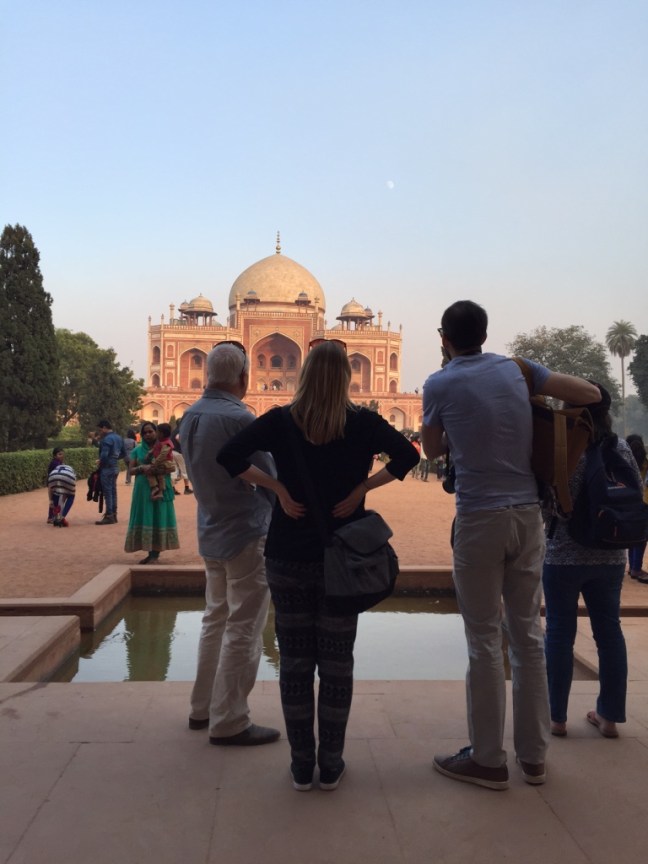
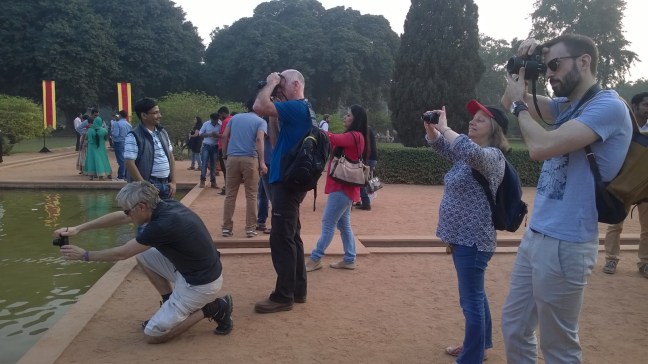
We arrived in Delhi at 2am this morning, and by the time we reached the hotel we were all understandably shattered. Fortunately Jenny and Kris had left the day for us to recuperate before starting work, and we were able to sleep for a while before heading off to play tourists in Delhi – visiting Delhi Gate, the Red Fort and Humayun’s tomb.

tourists

The team at play!

So we had a gentle introduction to our week, and a gentle introduction to Delhi. That is if you can have a gentle introduction to Delhi – there is so much going on, so many contrasts. We drove through the affluence of Chanakyapuri to the crush and congestion of Old Delhi. We saw the grandeur of the diplomatic district and the squalor that the “countryside people” (as our driver called them) live in. We laughed at the seeming chaos on the roads around the Red Fort before enjoying the calm and beautiful order of Humayun’s tomb. The air pollution was worse than I remember, but the smiles are beautiful, and the smells, colours, and noise are exciting and exhausting in equal measure. It’s good to be back!

Now we need to start work and tomorrow we will visit the Save the Children office before going to South Delhi to see a project which helps the urban poor through access to basic hygienic sanitation services. Put simply, provision of basic toilet facilities can have a significant impact for these impoverished communities, allowing children to survive longer and stay healthier. I know all of the team are anxious to see how Save the Children work with the local communities to make this happen. At the end of all our preparation, and after the long journey from the UK, tomorrow promises to be a fascinating day.